
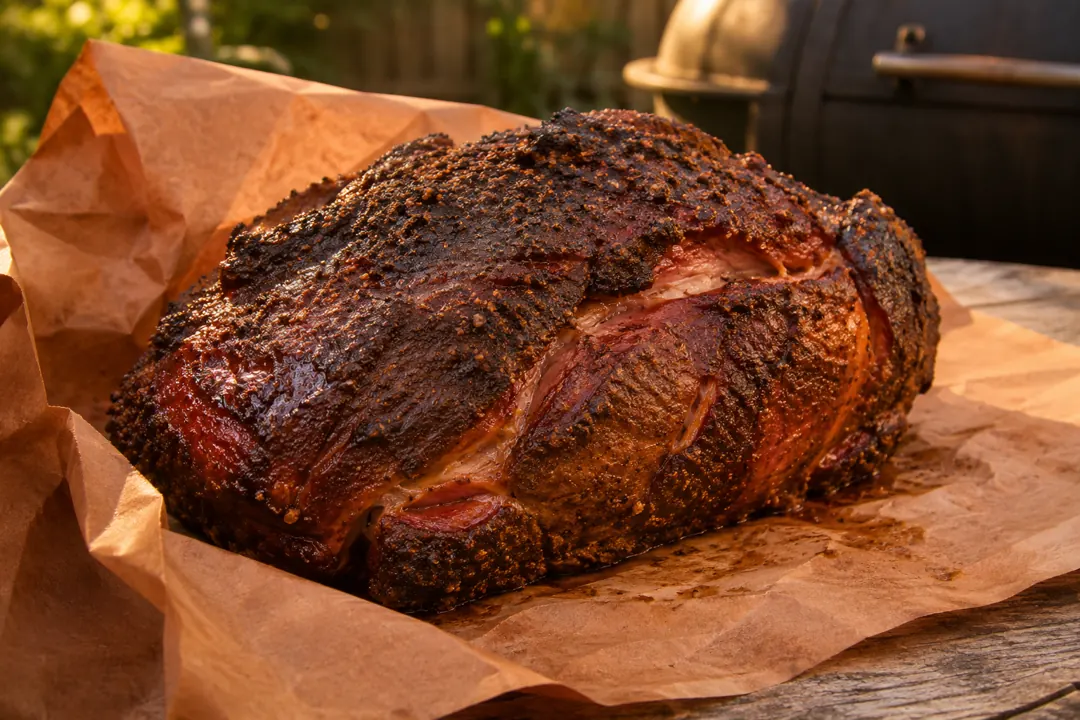
Verify the apparent stall
First look at the grate probe. If the fire has faded, a flat meat reading tells you very little. If the pit is steady, check the meat in a second spot, away from the bone or a pocket of fat. Evaporation from a large roast can offset incoming heat for a while.
Let the bark guide the wrap
Inspect a small patch with a clean utensil. Seasoning that smears is still forming its crust. Once the surface is dark and set, wrapping in foil can reduce evaporation and help the roast move through the stall. Fold the seams up to keep the juices. Expect a softer crust after wrapping.
Protect the serving plan
Write down the actual start time, current pit reading, and next check. If dinner is flexible, leave the shoulder exposed longer for a firmer bark. If guests are already arriving, serve the sides first. Pull when several thick spots feel tender to a probe. A schedule can absorb a delay more gracefully than an under-tender shoulder can.